
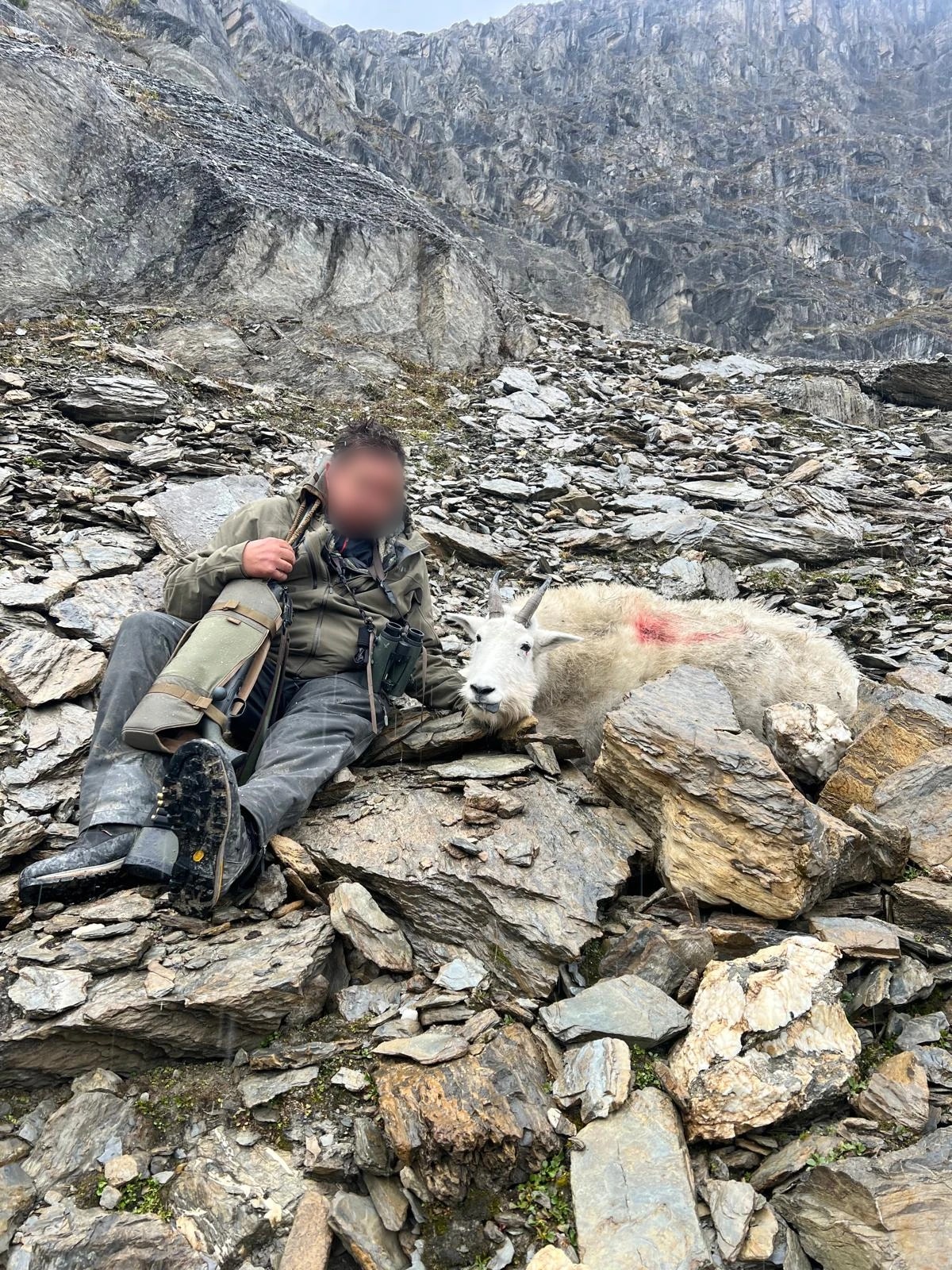
Preparing for mountain hunting means preparing for its specific demands rather than getting generally fit, and there are five that decide whether your hunt succeeds. The sustained climb under load, the punishing descent, thin air at altitude, cold and fast-changing weather, and the need to shoot accurately while your body is wrecked. General gym fitness prepares you for almost none of these. Real preparation means training your body and mind for each demand directly, and starting several months before you travel rather than several weeks.
The mountain is indifferent to how strong you are on flat ground. It will test your legs on the way up, punish them harder on the way down, thin the air you breathe, soak and freeze you without warning, and then ask for a steady shot at a difficult angle when you can barely control your breathing. At Field and Forest Hunting we run mountain hunts across Austria, Romania and the Russian far east, and from working with clients over many seasons we have found that the ones who understand these demands in advance, and prepare for each of them specifically, are the ones who come home successful. Here is how to be ready for what the mountain actually asks.
The demand of the ascent
The most obvious demand is the climb. You may spend two or three hours gaining serious height at the start of the day, carrying a pack, before the hunting even begins. This is a matter of the legs and the lungs working together under sustained load, and it cannot be faked.
Prepare for it by doing the thing itself. Walk uphill, repeatedly, carrying a weighted pack, on the steepest ground you can reach. Build the weight and the duration gradually over the months, aiming to be comfortable carrying a realistic load for several hours. There is a full training structure for this in our guide to training for your first mountain hunt, which is worth following closely if you are starting from a low base.
The demand of the descent
The demand that catches people out is not the climb but the descent. Going down a steep mountain for hours on tired legs places enormous eccentric strain on the knees and thighs, and it is where most first-timers suffer, sometimes badly enough to struggle on the following days.
In our experience, training on real hills works better than relying on a stair machine because the uneven ground, the awkward camber and the constant small adjustments prepare your ankles and stabilising muscles for what the mountain genuinely throws at you, whereas a smooth, predictable machine leaves you unready for the single rolled ankle that can end a hunt on the first morning. Practise walking downhill under load, build the leg strength to control your descent with squats and lunges, and consider a pair of trekking poles, which take a real bite out of the impact on your knees.
The demand of altitude
Above roughly 2,500 metres the thinning air becomes a genuine factor, and many mountain hunts in the Alps and Central Asia take you to that height or well beyond. You cannot properly train for altitude at sea level, so the preparation is largely about how you arrive.
Where the itinerary allows, build in a day or two at elevation before you start hunting, so your body has a chance to begin adjusting. Stay very well hydrated, go easy on alcohol in the first days, and be honest with your guide the moment you feel unwell rather than pushing through symptoms. Altitude sickness is not a test of toughness, and it is far better managed early.
The demand of the weather
Mountain weather is fast, cold and unforgiving, and it can turn from sunshine to sleet within the hour. Preparing for it is partly a matter of kit and partly a matter of mindset.
On kit, a proper layering system is essential, built around a moisture-wicking base, an insulating mid-layer and a genuinely waterproof and windproof outer shell, with spare gloves and a warm hat that live in your pack at all times. On mindset, accept in advance that you will be cold, wet and uncomfortable at some point, because the hunters who have made peace with that before they arrive cope far better than those expecting a pleasant walk.
The demand of the shot
All the fitness in the world counts for nothing if you cannot make the shot when it comes, and mountain shooting is uniquely difficult. You will be breathing hard, possibly shivering, shooting at a steep uphill or downhill angle across a valley, and you will rarely have a convenient rest.
Practise accordingly. Shoot from the field positions you will actually use, which means prone over a pack, sitting, and off a bipod on sloping ground, and get comfortable settling your breathing quickly before a shot. A stable platform is invaluable when your chest is heaving, which is why we rate a quality bipod among the most worthwhile pieces of mountain kit. Understand too that steep angles cause the bullet to strike high relative to your flat-range zero, so learn how your rifle behaves on an incline before you travel, and have it accurately zeroed and properly set up by a good gunsmith well in advance.
The demand on your mind
Mountain hunting is as much a mental challenge as a physical one, and this is the demand least often prepared for. You will endure long, cold, uneventful stretches, steep ground that tests your nerve, and the very real possibility of days of effort with no shot at the end. The hunters who thrive are the ones who expect this and stay patient and positive through it.
From working with clients across many mountain hunts, we have learned that a calm, determined mindset is often the difference between the hunter who quietly keeps going and quietly succeeds, and the one who lets fatigue and frustration take over on day two. Prepare your mind alongside your body by making your training genuinely hard, so that discomfort on the mountain feels familiar rather than alarming.
The demand on your kit
The mountain punishes unreliable equipment, and the rule is simple. Nothing new on the hunt. Every piece of kit you carry, above all your boots, should be tested and broken in thoroughly before you travel. Boots cause more ruined hunts than anything else, so buy them early, wear them for every training walk, and put real miles into them. Test your pack, your optics, your clothing and your rifle in the conditions you expect, so that on the mountain you are thinking about the hunt and nothing else.
Match your preparation to the hunt
Preparation also means choosing sensibly and training for the specific hunt you have booked. The Alpine ibex in Austria and the Carpathian chamois in Romania are demanding but achievable for a fit hunter, and are typically run as focused two-day hunts. The Kamchatka snow sheep is a far greater undertaking, with long foot approaches across remote volcanic wilderness, and it demands a correspondingly higher level of preparation. Getting the timing right matters too, which is why it is worth reading our guide on when to plan your trip before you commit.
The people behind the advice
This guidance is grounded in genuine experience. Our founder Paul holds a full German hunting licence, has spent his whole career in the industry, and still trains specifically for the mountain season every single year. Our US-based partner Cole spent eight years as a Tier One Wildland Firefighter, including time on a hotshot hand crew working brutal terrain, and has since hunted across five continents. Between them, the demands of the mountain are something they know from the inside, not from a manual. You can see the kind of country these hunts take place in through our gallery.
Plan your mountain hunt
Prepare for each demand directly, start early, test everything, and train your mind as hard as your legs, and the mountain becomes the experience of a lifetime rather than an ordeal you endure.
To talk through which mountain hunt suits you and how best to prepare, take a look at our current special offers or get in touch and speak to us directly. You can call us in the UK on +44 (0)7789 224466 or in the US on +1 (307) 259 9861, and we will give you a straight, experienced answer.
