
A List of What Training You Need for Your First Mountain Hunt
If you are preparing for your first mountain hunt, start training at least four to six months before you travel, and build the programme around loaded hill walking rather than gym work or flat running. The single most useful thing you can do is put a weighted pack on your back and climb steep ground repeatedly, because that is what the hunt itself will ask of you. Alongside that, break in your boots properly, practise shooting from field positions at steep angles, and be honest with yourself about your current fitness rather than optimistic.
Mountain hunting punishes the unprepared faster than any other kind of hunting. You are not simply walking a long way, you are climbing for hours with weight, at altitude, in cold and often unpredictable weather, and then being asked to make a steady, ethical shot while your heart is pounding. At Field and Forest Hunting we arrange mountain hunts across Austria, Romania and the Russian far east, and from working with clients over many seasons we have found that fitness, more than marksmanship or equipment, is what decides whether someone comes home with a trophy and a story or with a fortnight of regret. What follows is how to prepare properly.
Be honest about where you are starting from
Before you plan anything, take a realistic measure of your current condition. Walk a hill you know with a fifteen kilogram pack and see how you feel at the top and, more importantly, the following morning. That single outing will tell you far more than any fitness test.
We have found that hunters consistently overestimate their readiness for mountain ground, usually because they are fit in a way that does not transfer. Someone who runs regularly on the flat can still struggle badly on a two hour climb with weight, because the demands are different. There is no shame in discovering you need more time. There is a great deal of regret in discovering it halfway up a mountain in Austria with a guide waiting for you.
Start four to six months out
Four to six months is a realistic runway for most people, and longer is better if you are starting from a low base.
Begin with two or three walking sessions a week on the steepest ground you can reach, carrying a pack. Start light, somewhere around eight to ten kilograms, and focus on time on your feet rather than speed. Add weight gradually over the weeks rather than all at once, and build towards carrying eighteen to twenty kilograms comfortably for three or four hours. If you live somewhere flat, a treadmill on maximum incline or a stadium staircase will do the job, and repeated flights of stairs with a pack are better than nothing.
In our experience, loaded hill walking works better than gym cardio for mountain preparation because it trains the specific muscles and the descending control that mountain ground demands, whereas a stationary bike builds general fitness while leaving your legs completely unprepared for the eccentric strain of coming back down a steep slope. The descent is what wrecks most first-timers. Going up is a matter of lungs and patience, but coming down for two hours on tired legs is where knees give out and ankles turn.
Add strength work
Two strength sessions a week alongside the walking will make a substantial difference. Focus on the legs and the core, since those carry you and stabilise you.
Step-ups onto a bench with a loaded pack are probably the single most useful exercise, because they mimic exactly what you will do all day. Squats, lunges and single leg work build the strength to control your descent. Core work matters more than people expect, because a strong midsection keeps you stable on uneven ground and steadies you when you are shooting from an awkward position.
Do not neglect your ankles. Balance work on uneven surfaces reduces the risk of the turned ankle that ends a hunt on day one.
Practise the shot you will actually take
Fitness alone is not enough. Mountain shooting is different to anything you will have practised on a range bench.
You will be breathing hard, possibly shivering, and shooting at a steep angle across a valley. Steep angles matter ballistically, because on a sharply uphill or downhill shot the bullet strikes higher than your flat-range zero suggests. Understand that before you travel rather than discovering it in the field.
Practise from the positions you will actually use, which means prone over a pack, sitting, and off a bipod on sloping ground. A stable platform is essential when your chest is heaving, which is why we rate a quality bipod as one of the most worthwhile pieces of kit for the mountains. Get your rifle accurately zeroed and properly set up for the ranges you expect, and a good gunsmith is worth visiting months ahead rather than weeks.
A useful drill is to do twenty step-ups or a short hard climb and then immediately take a shot at a target. It teaches you how your body behaves under load and how long you need to settle your breathing.
Break in your boots
Boots deserve their own section because they cause more misery than anything else. Buy them early, buy them properly fitted, and wear them for every single training walk. By the time you travel you should have well over fifty miles in them. Blisters on day one of a two day hunt in the Alps will cost you the trip.
Bring quality socks, and pack a second pair of broken-in boots if your baggage allowance permits.
Think about altitude
Altitude becomes a genuine consideration above roughly 2,500 metres, and mountain hunts in the Alps and Central Asia frequently take you into that range or higher. You cannot train for altitude at sea level, but you can arrive early. Where the itinerary allows, giving yourself a day or two at elevation before hunting makes a real difference. Stay well hydrated, avoid alcohol in the first days, and tell your guide immediately if you feel unwell rather than pushing through.
Match the hunt to your level
Preparation includes choosing sensibly. The Alpine ibex in Austria and the Carpathian chamois in Romania are both excellent first mountain hunts, testing without being brutal, and typically structured as a focused two day hunt with comfortable accommodation each night. The Kamchatka snow sheep sits in a different category entirely, with long foot approaches across volcanic wilderness and a simple field camp, and it is the wrong choice for a first trip however hard you have trained. If you are still weighing up destinations, it is worth reading more on where the best mountain hunting is found and on choosing the right time of year before you commit.
The people behind the advice
This is not theoretical guidance. Our founder Paul has spent his entire career in the hunting industry, holds a full German hunting licence after passing the demanding Jagdschein, and still trains specifically for the mountain season every year despite decades in the field. Our US-based partner Cole spent eight years as a Tier One Wildland Firefighter, including time on a hotshot hand crew, and has hunted across five continents. Between them, the value of arriving genuinely fit is something we both feel strongly about, and it is the first thing we raise with anyone booking their first mountain hunt.
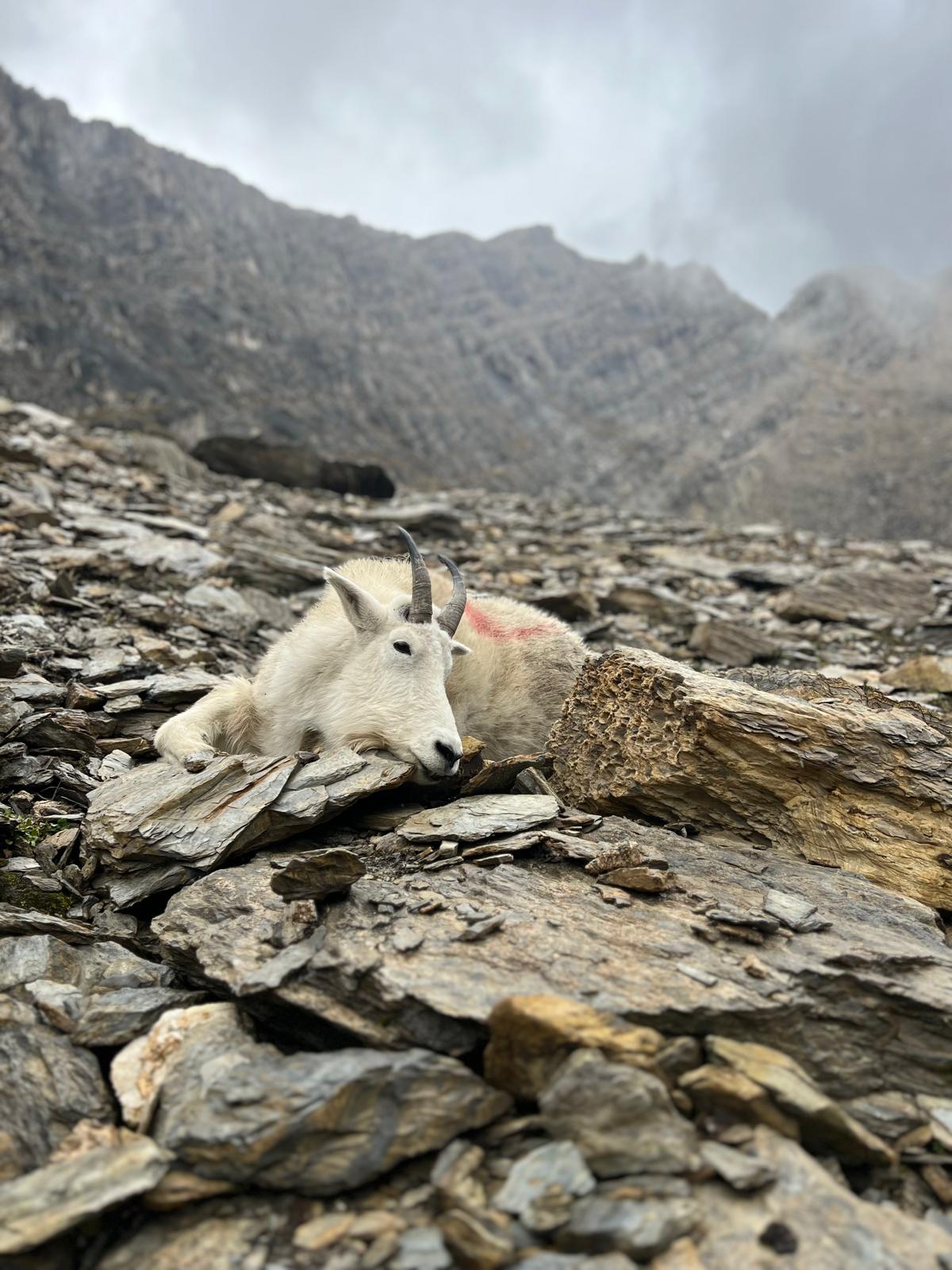
You can see the kind of country these hunts take place in through our gallery, which gives a far better sense of the terrain than any description.
The final fortnight
Taper in the last two weeks. Reduce the volume and the pack weight, keep moving, and let your legs recover so you arrive fresh rather than fatigued. Sort your kit early, test every piece of it, and confirm your rifle is still zeroed after transport.
Arrive rested, broken in and confident, and the mountain becomes an experience rather than an ordeal.
To talk through which mountain hunt suits your level and how long you should give yourself to prepare, take a look at our current special offers or get in touch and speak to us directly. You can call us in the UK on +44 (0)7789 224466 or in the US on +1 (307) 259 9861, and we will give you a straight, experienced answer.
