
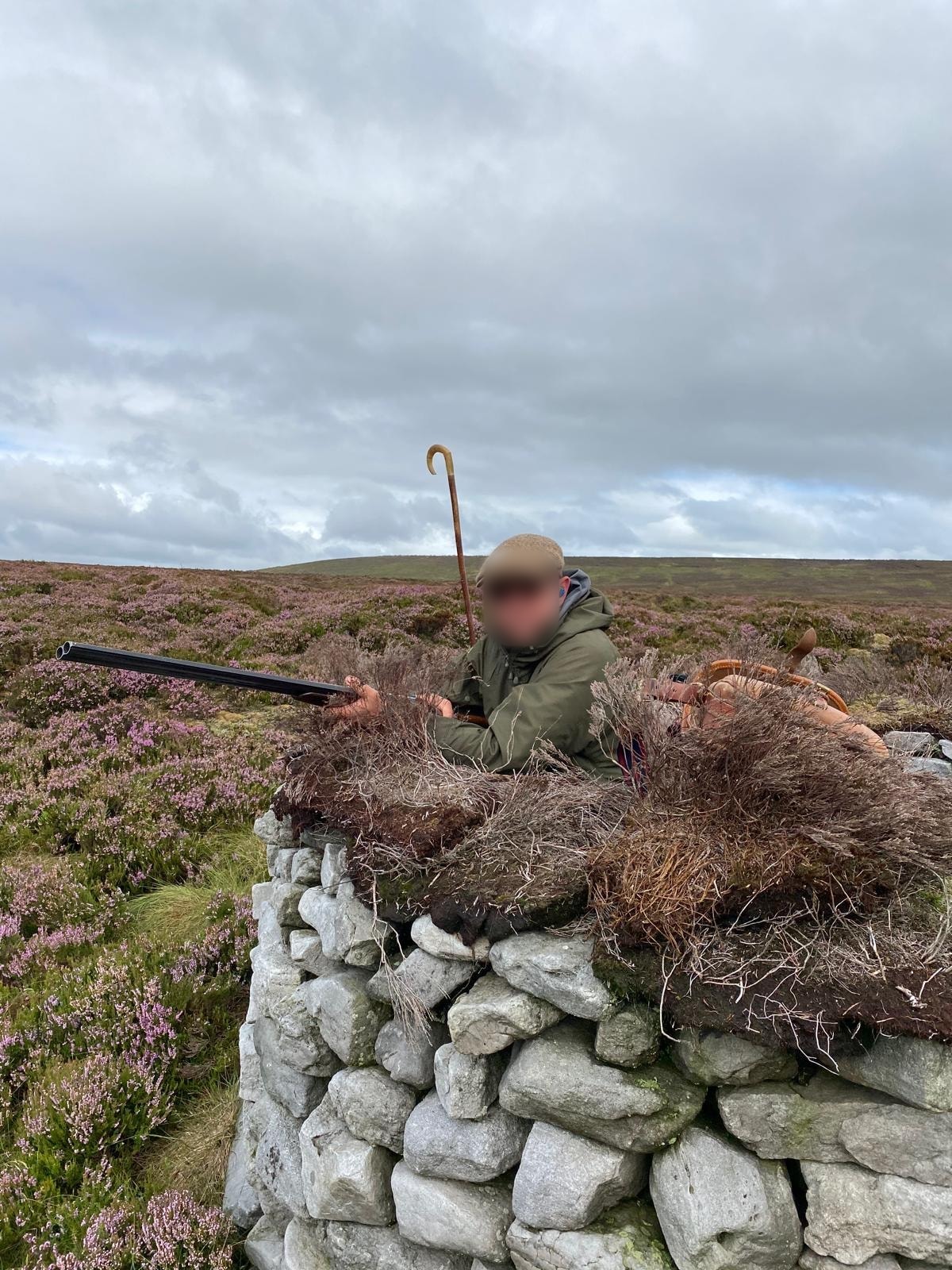
So, What Is a Driven Hunt
A driven hunt is a form of hunting in which a team of beaters and dogs works through woodland or cover to push game towards a line of waiting hunters positioned at fixed stands. Rather than the hunter seeking out the animal, the game is brought to the hunter, which means shots are taken at moving quarry, usually at close range and often within a few short seconds. It is a highly organised, social style of hunting practised across Continental Europe for centuries, most commonly for wild boar and deer, and in Britain it takes the familiar form of driven pheasant and partridge shooting.
The defining feature is the drive itself. A given piece of ground is worked systematically, the guns are placed to cover the routes the game is likely to take, and everything is coordinated by a hunt master who sets the rules and the boundaries. At Field and Forest Hunting we arrange driven hunts across Hungary, Austria, Germany, Croatia and Romania, and our founder Paul takes part in between forty and fifty driven hunts every year. Below we explain how a driven hunt actually works, who does what, how it differs from stalking, and what it demands of you as a participant.
The people who make a driven hunt work
A driven hunt only functions because of the number of people involved, and understanding the roles helps you see why the day runs the way it does.
The hunt master runs everything. They decide the drives, set the safety rules, brief the party, and close the day. Their word is final and there is no negotiating with it.
The beaters form the line that moves through the cover, working with trained dogs to push game forward. This is hard, physical work in thick ground, and the beating team is usually far larger than the number of guns. Good dogs are essential, since they find and move animals that would otherwise sit tight and let the line pass over them.
The guns, meaning the hunters, are placed at numbered stands, often raised seats or marked positions along rides and firebreaks. Positions are usually drawn by lot so that everyone gets a fair share of the action across the day. On some formal Continental hunts and on the best driven bird days, each gun may also have a loader or a guide standing with them.
How a driven hunt differs from stalking
The contrast with stalking is total, and it is worth being clear about it before you book.
Stalking is solitary, slow and patient. You go to the animal, reading the wind and the ground, and you may spend an entire morning working towards one deer. The shot, when it comes, is usually taken from a stable rest at a stationary animal, and you have time to judge it carefully.
A driven hunt inverts all of that. The animal comes to you, at speed, and you shoot standing and unsupported at a moving target. There is no time to settle, and the decision to shoot or hold has to be made in a couple of seconds. It is also intensely social, with the whole party gathering between drives and at the end of the day.
In our experience, a driven boar hunt works better than a solo high seat sit as a first taste of Continental hunting because the sheer organisation of the day means you are guaranteed to see game and be part of the tradition, whereas a high seat night can easily pass without a single animal appearing and leaves a first-time visitor with very little to show for the trip. Both have their place, and many hunters end up loving the quiet of the high seat, but for a first visit the driven day gives far more.
The main kinds of driven hunt
Driven big game is the Continental tradition, and wild boar is the classic quarry. A driven boar day typically involves two or three drives, each lasting somewhere around ninety minutes to two hours, with a hot lunch in the field between them. Red deer, fallow deer, mouflon and fox may also feature depending on the country and the estate rules. Germany and Austria offer the most formal and ritualised version of this, while Hungary is known for high-volume days on large, well-organised ground.
Driven game birds are the British expression of the same idea. Pheasant shooting in the UK follows exactly the same principle, with beaters pushing birds over a line of guns standing at pegs, and a typical day made up of around four drives. The pheasant season in Great Britain runs from 1 October to 1 February, and partridge from 1 September to 1 February.
When driven hunts take place
Driven hunts are a cold-weather pursuit. For wild boar and deer the season broadly runs from October through to January, and December and January are widely regarded as the prime months, once the leaves are down, the ground is cold and the game is concentrated. Driven bird days follow the game bird seasons above.
The practical point is that the best driven days book up a long way ahead, particularly for groups. Our current special offers have included a Hungarian driven boar package with two days of driven hunting and three nights half board, priced per hunter for a group of ten, which gives a sense of how these days are typically structured and sold.
What is expected of you
Safety discipline is the single biggest expectation. There are dozens of people and dogs moving through the wood towards you, so you will be told never to shoot along the line, never to take a shot without a safe backdrop, and to know exactly where your neighbours are standing. You will also be told precisely what may and may not be shot, and on many Continental hunts the shooting of a mature red stag on a driven day is forbidden outright and carries real legal consequences. Listen carefully at the briefing and ask if anything is unclear.
Concentration is the other demand, and it catches people out more than the shooting does. You may stand for forty minutes in the cold hearing nothing at all, then have three seconds to identify, judge and shoot. From working with clients over many seasons, we have found that the hunters who struggle are rarely the ones who cannot shoot straight. They are the ones whose attention drifts during the quiet stretches.
Dress for standing still in winter, layering properly and paying particular attention to feet and hands.
Kit and shooting
Driven shooting rewards the right equipment. For big game, a low-magnification variable scope in the region of one to four or one to six power suits a running animal far better than a high-magnification optic, because at low power you can keep both eyes open and swing with the movement. An illuminated reticle or red dot helps considerably in poor forest light. Have your rifle properly set up, checked and zeroed by a good gunsmith before you travel, since arriving with unsuitable optics is the most common way hunters waste an expensive day. If you can find a running boar range beforehand, use it, because shooting moving targets under time pressure is a learned skill.
The ceremony at the end
What sets the Continental driven hunt apart is how it finishes. All the game taken is laid out in formal rows on a bed of pine branches, lit by torches, with hunters, beaters and dog handlers gathered around. Hunting horns are sounded, each species is honoured in turn, and the day is closed with real ceremony. It is a tradition going back centuries and it is genuinely moving. You can see something of the atmosphere in our gallery, and there is more on our destinations and inspiration pages if you are weighing up where to go.
Plan a driven hunt
A driven hunt suits hunters who want action, camaraderie and tradition rather than solitude, and it is one of the most enjoyable ways to experience European hunting culture properly. Come prepared for the cold, practised on moving targets, and ready to listen at the briefing.
To find a driven day that suits you or your group, get in touch and speak to us directly. You can call us in the UK on +44 (0)7789 224466 or in the US on +1 (307) 259 9861, and we will give you a straight, experienced answer.
