
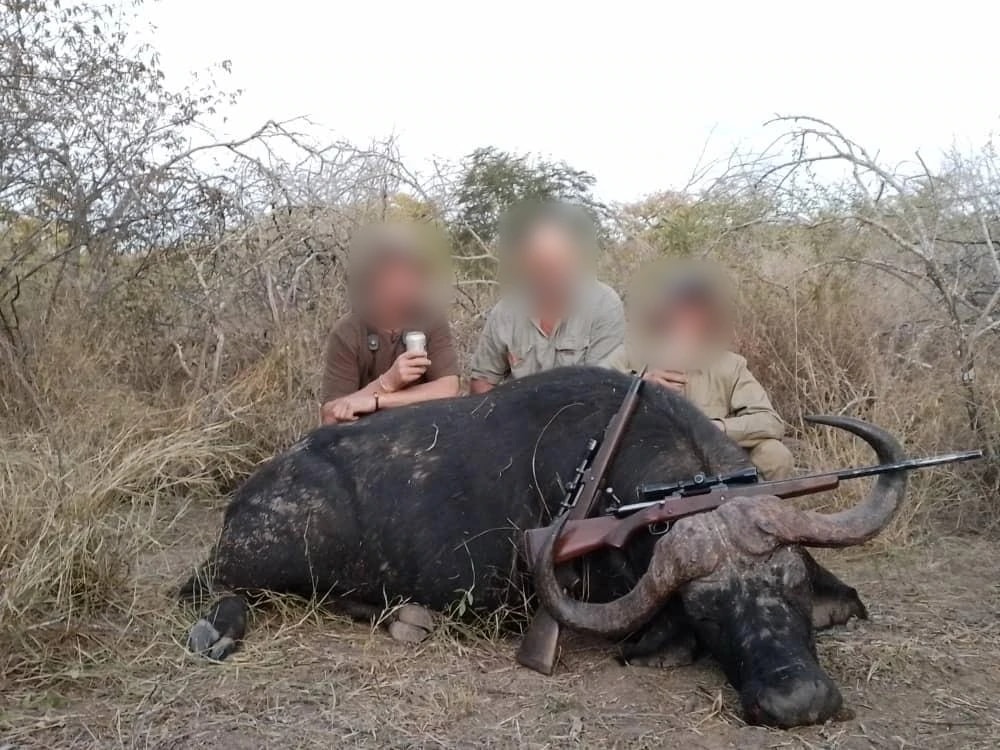
Guided Tracking Cape Buffalo in Africa
Tracking Cape buffalo in Africa is widely regarded as one of the most demanding and exhilarating pursuits in all of hunting. It is done on foot, following the spoor of these huge, unpredictable animals through thick bush until you are close enough for a shot, usually within thirty to eighty yards. The best place to do it is in the wild concessions of southern Africa during the dry season, and at Field and Forest Hunting we arrange buffalo hunts in Zimbabwe on mostly non-fenced, genuinely wild ground where the experience is as authentic as it gets.
If you are planning a Cape buffalo hunt, the essentials are straightforward. You will track on foot with a professional hunter and skilled local trackers, you will need a rifle of at least .375 calibre, which is the legal minimum for dangerous game in Zimbabwe, and you should plan to hunt during the dry months when buffalo concentrate near water and the ground reads more clearly. The rest of this guide explains why the buffalo earns its fearsome reputation, where and when to hunt, how the tracking actually works, and how to prepare so that your first shot counts.
Why the Cape buffalo earns its reputation
The Cape buffalo is one of Africa’s Big Five, the animals long considered the most dangerous to hunt on foot, alongside the elephant, lion, leopard and rhino. A mature bull is immensely powerful, weighing far more than any man can shift, and is well known for its aggression when threatened or wounded. Hunters have nicknamed it the Black Death for good reason, because a buffalo that has been hit and not stopped will often circle back and lie in wait for whoever is following it.
This is exactly what makes it such a sought-after big game animal. The buffalo is extraordinarily tough, carrying a heavy, muscular body and a thick boss of horn across the skull, and it takes a well-placed shot from a serious calibre to bring one down cleanly. We have found that the hunters who respect the animal most, and who prepare properly, are the ones who come away with both a trophy and the experience of a lifetime.
Where to track buffalo in Africa
For most hunters the standout destination is Zimbabwe, and it is where we focus our buffalo hunting. The country holds strong, healthy buffalo populations across vast wilderness areas such as the Zambezi Valley, and much of the best hunting takes place on non-fenced concessions where the buffalo are genuinely wild and free-ranging. That matters enormously, because tracking a wild herd across open country is a completely different proposition to anything that happens behind a fence. You can read more about what we offer on our Zimbabwe destination page, including the plains game and other species you can add to a safari.
When to go
Timing is everything on a buffalo hunt. The dry season, broadly from May to October, is comfortably the best time to track buffalo, because as the bush dries out and water becomes scarce the herds concentrate around the remaining sources and become far easier to locate. The early dry season tends to offer softer, more readable ground for following spoor, while the late dry season is hotter and dustier but pushes the buffalo reliably towards water. Either way you should plan for long days on foot in the heat, so a reasonable level of fitness makes the experience far more enjoyable.
How tracking a buffalo actually works
The heart of the hunt is the tracking itself. At first light your professional hunter and local trackers will cut for fresh spoor, reading prints, dung and feeding sign to work out how many buffalo passed, how big they are, and how long ago they moved through. From there it becomes a patient game of following the trail, staying downwind, and closing the distance quietly until you can see the animals and assess them.
In our experience, tracking a lone old bull, one of the dagga boys that have left the breeding herds, works better than going into a large herd for your buffalo because a single animal gives you a calmer and more controllable approach and a clearer shot, whereas a herd brings dozens of eyes, ears and noses and far more that can go wrong in an instant. Either can produce a magnificent trophy, but the lone bull is often the wiser choice, particularly for a hunter taking their first buffalo. From working with clients over many safaris, we have learned that the final approach, the last fifty yards, is where patience and discipline matter most.
The shot and the rifle
When the moment comes, your equipment and your shooting need to be beyond doubt. The .375 is the legal minimum for buffalo in Zimbabwe, and while it is genuinely capable in the right hands, many experienced hunters step up to a .416 or .458 for a greater margin in a close encounter. Load a premium bonded soft-point for the first shot, placed into the heart and lung area on a broadside or slightly quartering animal, and back it up with solids for the deep penetration that follow-up shots demand.
Above all, practise from shooting sticks, because that is how the vast majority of buffalo are taken, standing and supported rather than off a bench. Make sure your rifle is properly set up, accurately zeroed and utterly reliable well before you travel, and a good gunsmith is worth visiting early so you arrive completely confident in your kit. With dangerous game, shot placement matters more than sheer calibre every single time.
The experience behind the hunt
Buffalo hunting is not a hunt to learn on your own, and the value of genuine experience cannot be overstated. Our founder, Paul, has completed more than twenty-five African safaris and has personally taken Cape buffalo into double figures, so the guidance we give comes from real time spent on the trail of these animals rather than from theory. Our US-based partner, Cole, has hunted across five continents, which adds further depth to the advice we can offer. That combination of hard-won experience is exactly what you want behind you when you are following a wounded buffalo into thick cover.
You can see the kind of trophies and country these safaris produce in our gallery, which gives a far better sense of the experience than words alone.
Plan your Cape buffalo hunt
Africa is rightly regarded as one of the world’s top trophy hunting destinations, and a Cape buffalo is among its greatest prizes. Tracking one on foot through wild country, closing the final yards, and placing a clean shot is an experience that stays with a hunter for the rest of their life.
To start planning a buffalo safari, get in touch and speak to us directly, and you can also browse our current special offers for the latest packages across our other destinations. You can call us in the UK on +44 (0)7789 224466 or in the US on +1 (307) 259 9861, and we will give you a straight, experienced answer.
