
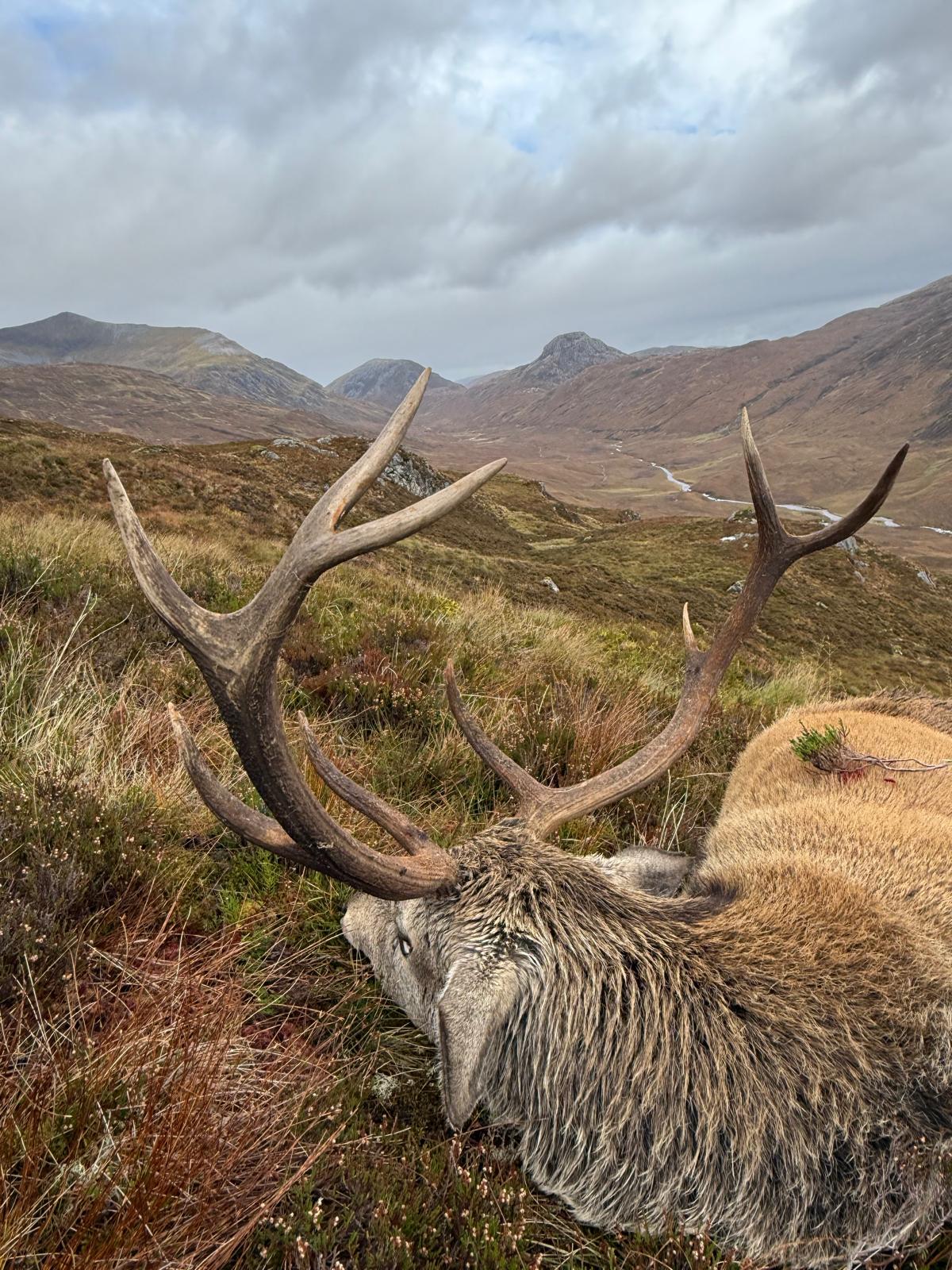
Professional Red Stag Stalking in Scotland
Red Stag Stalking in Scotland remains one of the most iconic hunting experiences anywhere in the world. The combination of open Highland landscapes, free-ranging stags, unpredictable weather, and deeply rooted sporting tradition creates an experience that feels entirely different from more structured continental hunts. At Field and Forest Hunting, we organise stalking trips across the British Isles as well as internationally, and in our experience, Scotland consistently delivers one of the most immersive and physically rewarding hunts available in Europe. Over the years, we’ve guided and organised hunts for clients travelling from across Europe, North America, and beyond, and what we’ve found is that many arrive expecting a trophy-focused trip but leave talking most about the overall Highland experience.
What Makes Red Stag Stalking in Scotland Unique
Scotland stands apart because the hunt revolves around the landscape itself. Unlike woodland stalking or driven hunting elsewhere in Europe, Highland stalking often takes place across huge open glens, steep hillsides, peat ground, and exposed ridges where visibility and wind direction constantly change.
As a result, the stalk becomes far more involved physically and mentally. Hunters spend significant time glassing, planning routes, and adjusting approaches based on terrain and weather conditions.
In our experience, Red Stag Stalking in Scotland works better than heavily managed woodland stalking for hunters wanting a more authentic and demanding hunt because every stage of the process feels earned rather than controlled. What actually tends to happen is that the final few hundred metres become the most difficult part of the entire day, particularly once the wind starts shifting across open ground.
The Scottish Red Stag Rut
The rut remains the most sought-after period for stalking red stag in Scotland. Typically running through September and into October, this is when stags become highly vocal, territorial, and more active across the hills.
The atmosphere during the rut is difficult to replicate anywhere else. Early mornings often begin with stags roaring across glens before daylight fully breaks, while groups of hinds move constantly across open hill ground.
In practice, we’ve found that the rut consistently creates the most memorable experience for visiting hunters because activity levels remain high throughout the day. However, it also creates additional challenges, as stags move unpredictably and can cover large distances quickly once disturbed.
Over the years, we’ve organised numerous rut hunts across Scotland, and one pattern consistently stands out. Patience usually determines success far more than speed or aggression during the stalk.
Physical Challenge and Terrain
One factor many first-time visitors underestimate is the physical nature of Red Stag Stalking in Scotland. Highland terrain demands far more effort than many other European hunts because movement often involves steep climbs, boggy ground, long approaches, and rapidly changing weather conditions.
In our experience, Scottish stalking works better for hunters who prepare physically beforehand because fatigue can quickly affect both shooting and decision-making once conditions become difficult.
Typical Highland stalking conditions often include:
- Long periods of walking across uneven terrain
- Rapid weather changes throughout the day
- Strong winds affecting both movement and shooting
- Wet ground and steep ascents
What we see time and time again is that preparation usually becomes one of the deciding factors in how much hunters enjoy the experience overall.
The Role of the Stalker and Guide
Experienced stalkers play a major role in successful Highland hunts. Reading wind, understanding stag behaviour, and planning safe approaches all require local knowledge developed over years on the hill.
Unlike more controlled hunting environments, Scottish stalking often requires constant adaptation throughout the day. Guides may completely change the route or approach within minutes if conditions shift.
In our experience, local knowledge works better than rigid planning in Scotland because the environment changes too quickly for fixed routines to remain effective. From working with experienced Highland stalkers over many seasons, we’ve found that flexibility and patience consistently produce better outcomes than rushing opportunities.
Rifle Setup and Equipment
Preparation matters significantly during Highland stalking. Conditions can shift rapidly from clear visibility to heavy rain or mist within a short period, which means clothing and equipment need to perform reliably.
Essential preparation usually includes:
- Waterproof outer layers
- Quality boots suitable for peat and hill ground
- Lightweight but reliable optics
- A rifle setup suitable for uneven shooting positions
Stable shooting systems such as those from Spartan Precision Equipment can make a noticeable difference on open Highland terrain where improvised shooting positions are common. Likewise, reliable rifle performance remains critical, which is why many experienced hunters work with specialists such as Barton Gun Works before travelling.
In practice, we’ve found that poor preparation causes more issues than the difficulty of the stalking itself.
Estate Management and Wild Highland Stags
One reason Scotland continues producing such respected stalking is the long-term management carried out across Highland estates. Good estates focus heavily on balancing stag quality, habitat condition, and population control over many years.
As a result, well-managed ground consistently produces:
- Strong mature stags
- Better age structure within populations
- More natural rutting behaviour
- Sustainable long-term stalking quality
From working across multiple estates, we’ve found that the best stalking experiences usually come from estates prioritising long-term quality over short-term trophy pressure.
Why International Hunters Continue Choosing Scotland
Scotland attracts international hunters because the experience feels genuinely different from most modern hunting environments. While some countries offer larger species lists or more predictable opportunities, Scotland offers atmosphere, challenge, and tradition in equal measure.
Over the years, we’ve helped organise stalking trips for clients from several continents, and one thing consistently stands out. Many hunters return specifically because the experience feels authentic rather than commercialised.
In practice, what separates Red Stag Stalking in Scotland from many other hunts is the combination of:
- Open Highland terrain
- Free-ranging wild stags
- Traditional stalking methods
- Unpredictable natural conditions
- Deep-rooted sporting culture
Combining Scottish Stalking with Other UK Sporting Experiences
Many hunters now combine Scottish stalking with shooting or stalking elsewhere in the British Isles. Trips combining Hunting in England with Highland stalking have become increasingly popular because they allow hunters to experience completely different styles of British sporting culture within one journey.
In our experience, combining Highland stalking with driven pheasant shooting works better than separate standalone trips because it creates a broader and more memorable overall sporting experience.
Conclusion
Red Stag Stalking in Scotland remains one of the finest hunting experiences available anywhere in the world. The combination of open Highland landscapes, challenging stalking, wild stags, and traditional sporting culture creates a hunt that feels both demanding and deeply rewarding. At Field and Forest Hunting, we organise stalking trips across Scotland using trusted estates and experienced Highland stalkers we know first-hand, ensuring every hunt reflects the authenticity and quality hunters expect from the Highlands. Over the years, we’ve helped hunters from across the world experience Scottish stalking at its best, and what consistently stands out is how strongly the landscape and atmosphere stay with people long after the hunt ends. If you want to experience Red Stag Stalking in Scotland for yourself, Contact us to find out more.
