
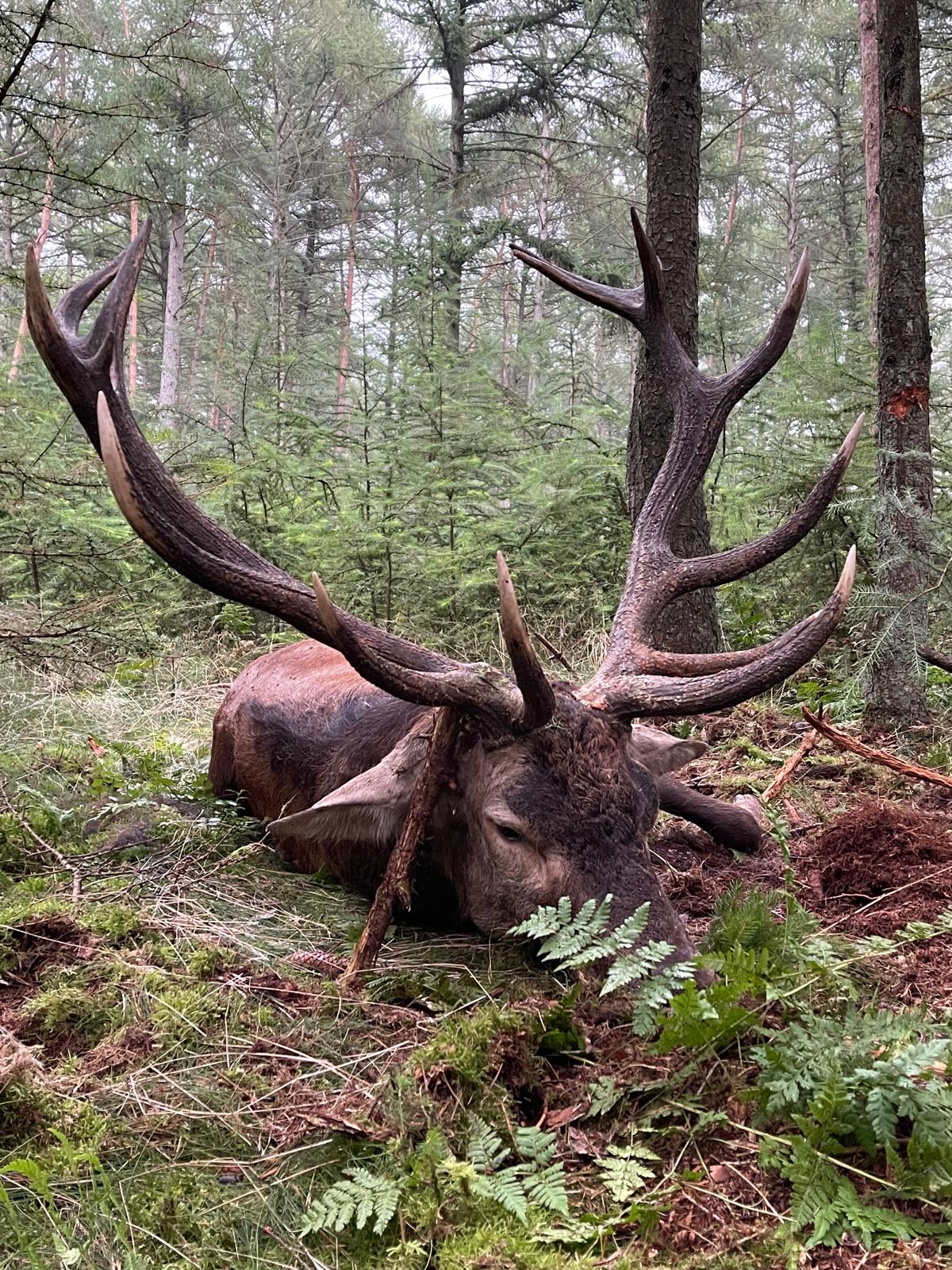
Canada is the world’s premier destination for moose hunting, offering the chance to pursue the largest member of the deer family across vast, genuinely wild country. The best hunting is found in British Columbia, the Yukon, Alberta and Newfoundland, and the prime time is the autumn rut, which runs from around mid-September to mid-October, when bull moose are on the move and can be called into range. For most visiting hunters the experience means a guided trip into true wilderness, often reached by float plane, boat or horseback, in pursuit of a bull that can weigh well over half a tonne.
If you are planning a Canadian moose hunt, two things are essential to understand from the outset. Non-resident hunters must hunt with a licensed guide-outfitter, which is a legal requirement across the provinces, and the method and timing you choose will shape the whole trip. At Field and Forest Hunting we arrange moose hunts in Canada as part of our North American programme, and this guide sets out where to go, when to travel, how moose are actually hunted, and how to prepare for one of the great hunts of the continent.
Why Canada is the premier moose destination
Canada holds enormous, healthy moose populations across its boreal forests and mountain valleys, and it produces the biggest bulls in the world. Three subspecies are found across the country. The Canadian or Western moose is the most widespread and sits in the middle of the size range, the enormous Alaska-Yukon moose is found in the far north and carries the largest antlers of all, and the smaller Shiras moose lives in the southern mountains. A mature bull is a genuinely imposing animal, dark and heavy-bodied, carrying broad palmated antlers that can stretch well over fifty inches across.
Beyond the animal itself, it is the country that makes a Canadian moose hunt so special. You are hunting in remote, unspoilt wilderness of willow flats, river bottoms and timbered valleys, often miles from the nearest road, in a landscape that has changed little in centuries. We have found that hunters come home talking about the sheer wildness of the experience as much as the trophy on the wall.
Where to hunt
British Columbia is one of the finest and most accessible options, holding strong populations of Western moose across its northern regions, the Peace country and the great river valleys, with genuine Alaska-Yukon genetics near the northern border. The Yukon offers the classic far-north wilderness hunt for the largest bulls, typically reached by float plane into fly-in camps. Alberta, Newfoundland and other provinces each add their own character, from the eastern forests to the western foothills. You can read more on our North America destination page, which also covers the many other species the continent offers.
When to go and how moose are hunted
Timing is everything on a moose hunt. Early in the season, from late August into early September, moose are still in their summer range and can be hunted by glassing and spot-and-stalk, which is a fine time if the eating quality of the meat is your priority. The rut, from around mid-September to mid-October, is the highlight, when bulls roam widely in search of cows, become far more visible, and will respond to calling.
Calling is the classic and most exciting method. Your guide imitates the call of a cow or a rival bull, and a rutting bull comes in to investigate or to drive off the intruder. It is a thrilling, interactive way to hunt such a huge animal. Other methods include spot-and-stalk from a vantage point, still-hunting along cutlines, and hunting from a boat or on horseback to cover the vast ground.
In our experience, hunting the September rut with calling works better than an early-season stalk for most visiting hunters because a rutting bull will answer a call and commit to coming towards you across open ground, whereas the early season means covering enormous country for animals that are far more scattered and unpredictable. If the trophy is your goal, plan around the rut.
Combining species
One of the great advantages of a Canadian hunt is the chance to combine moose with other species on the same trip. Depending on the area and the season, a moose hunt can be paired with black bear, grey wolf, mule deer, mountain caribou or mountain goat, all of which we can arrange in North America. This makes a long-haul trip go a great deal further, and it is well worth discussing when you plan.
The rifle and your kit
A moose is a huge, heavy-boned animal, so you need a capable calibre and, above all, good shot placement. A well-constructed bullet from an adequate cartridge, placed correctly into the vitals, is what matters most. Make sure your rifle is accurately zeroed and thoroughly reliable before you travel, and a good gunsmith is worth visiting well beforehand. Beyond the rifle, bring quality optics, broken-in boots and proper layered clothing for cold, wet autumn conditions, since the weather in the Canadian bush turns quickly.
The experience behind the hunt
North America is where our US-based partner Cole is genuinely in his element. Raised on a Wyoming cattle ranch, he spent his youth hunting, trapping and fishing, guided big-game hunts in Wyoming, and has since hunted across five continents and more than fifty destinations, with deep roots in North American hunting in particular. That first-hand knowledge of the continent, its game and its outfitters is exactly what stands behind the trips we arrange, and it means we can match you to the right area, the right season and the right combination of species. You can see the kind of animals and country these hunts produce in our gallery, and there is more on big-game options in our guide to where to hunt big game.
Plan your Canadian moose hunt
A moose hunt in Canada is a genuine wilderness adventure and, for many, the hunt of a lifetime. Choose the rut for the best chance at a big bull, plan your access and combination of species carefully, and prepare properly for the conditions. As with all our guided hunting trips worldwide, the groundwork is what makes the difference.
To start planning, get in touch and speak to us directly. You can call us in the UK on +44 (0)7789 224466 or in the US on +1 (307) 259 9861, and we will give you a straight, experienced answer.
